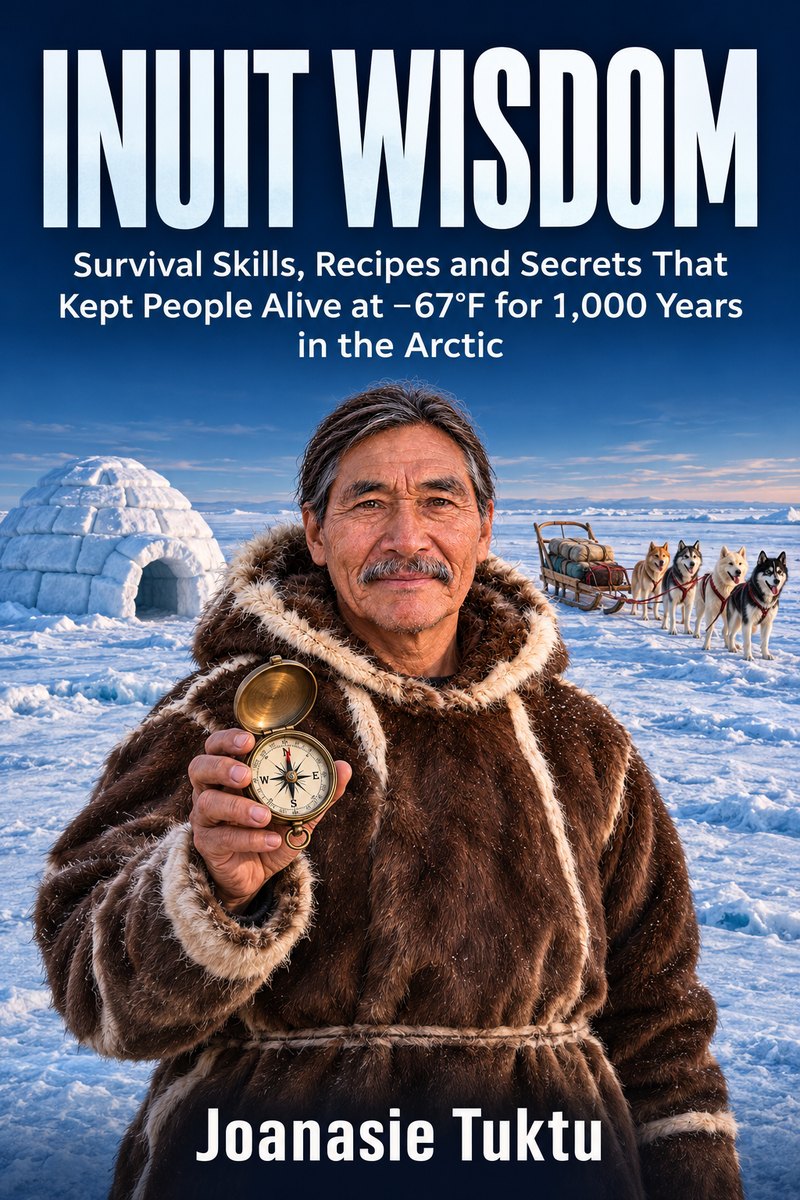
Inuit Wisdom: 101 survival skills, recipes and secrets that kept people alive at −65°F (−54°C) for a thousand years in the Arctic, turned into a clear plan for keeping your own home warm in a winter blackout.
In February 2021, a winter storm knocked out power to millions of people in Texas for days, many in homes never built for that cold. Most died from the cold itself. Others died from what they did to fight it.
Source: Texas Department of State Health Services
You do not fight the cold. You stop giving your warmth away.What the elders would say · from the foreword
No trees to burn. Weeks without sunrise. Cold down to −65°F (−54°C). Inuit and their Thule ancestors survived it for centuries, not by making lots of heat, but by losing very little. A well-built snow house, warmed mostly by the people inside and one small stone lamp, could stay between about 19°F and 61°F (−7 to 16°C) inside while deep cold raged outside. This book shows you how to build that shelter inside your own home.
Joanasie Tuktu is the storyteller of our YouTube channel. The knowledge he passes on is not his own invention, and it isn't ours: it belongs to Inuit, whose practice differs from region to region and family to family. Inuit are still here, across Nunavut, Nunavik, Nunatsiavut, the Inuvialuit region, Greenland and Alaska. Every safety step in the book follows current official guidance, with the source named.
Joanasie Tuktu is a fictional storyteller created with AI — name, face and voice.
Secret 101 sums it up. The other hundred show you exactly how.
101 numbered secrets in four parts and thirteen chapters
Pick the right room, build a blanket "entrance tunnel", stop draughts, insulate windows and floors, and make a room inside the room.
The never-and-always rules for heaters, generators and CO alarms, straight from CDC and CPSC guidance, and when it's time to leave.
The raised sleeping platform, pre-warming the bed, what to wear, and a night checklist for the whole family.
Two layers with air between, closing the openings, mittens not gloves, loose boots and keeping everything dry.
Storing water, making snow water safe, USDA food rules for a dead fridge, and a no-cook pantry on a small budget.
Snow shelters, polar bear country, thin ice, frostbite, hypothermia, and finding your way in a whiteout.
Everything above, in one book you can read tonight and set up this weekend.
No. Traditional practices are presented as history and culture, with respect. Inuit knowledge is a living heritage, practice differs from one region and family to the next, and this book doesn't speak for Inuit or replace what Inuit elders and communities teach. The book points you to Inuit voices directly: Inuit Tapiriit Kanatami, IsumaTV and the Inuit-owned publisher Inhabit Media.
No. Most of the book is about an ordinary house or apartment in a winter blackout. The core of it is blankets, a tent or blanket fort, stored water, a no-cook pantry, battery lights and a carbon monoxide alarm, and habits you can start small.
Every safety step follows official guidance (CDC, USDA, US Consumer Product Safety Commission, Canadian Red Cross, Parks Canada), with the source named. The book is for education and general preparedness. It's not medical advice and not a training manual for Arctic travel, hunting, ice travel or wilderness survival. In an emergency, call emergency services.
No. They're home-kitchen versions inspired by Arctic food traditions, using ingredients you can buy. Where a dish was adopted from outsiders, like bannock, the book says so. It gives no instructions for traditional fermented foods, for safety reasons explained in Chapter 8.
No. Joanasie Tuktu is a fictional storyteller with an AI-generated name, face and voice, and the book was written with AI assistance. He is not Inuit and doesn't speak for Inuit or any Inuit community. The cultural and historical information comes from published sources, all listed at the back of the book.
A PDF you can read on your phone, tablet or computer, or print out for your blackout kit, which is worth doing. Gumroad emails you the download link straight after purchase.
You're covered by our 7-day money-back guarantee. Email us at joanasietuktu@gmail.com within 7 days of purchase and you'll get a full refund, no questions asked.
Read it, set up your warm room, try the checklists. If the book isn't for you, email us within 7 days of purchase and you'll get every cent back. No questions asked.
Option 1: Hope the next outage is short, and work it out in the dark when it isn't.
Option 2: Learn what a thousand years in the Arctic can teach you, set up your warm room this weekend, and keep your family warm, fed and safe.